
Para Gymnastics | Scottish gymnasts first in the world to undergo para classification evaluations
Seven Scottish gymnasts become first in the world to undergo Paralympic classification test evaluations for the sport of gymnastics.
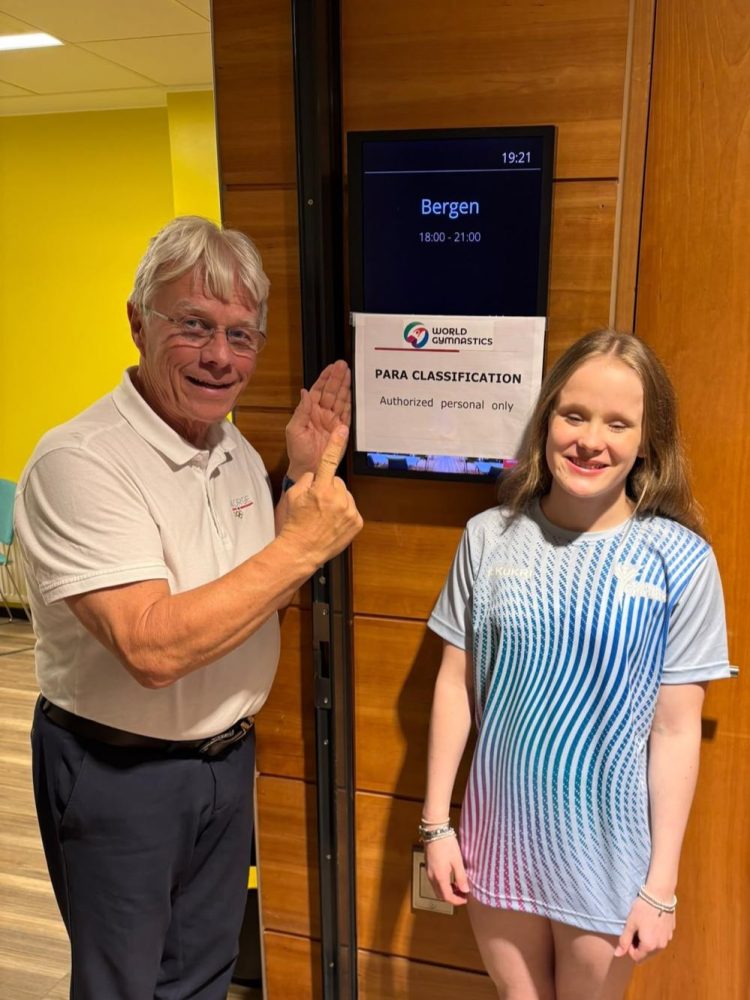
Scotland has been trailblazing the development of the para-gymnastics pathway since day one. Seven Scots etched their names into the history books once again in at the International Friendship Competition. Before the competition, the team underwent Paralympic classification test evaluations in Norway last month.
Classifications are a system used in disability sport to groups athletes with similar impairments to ensure fair competition. These however are not the same for every sport due to their various unique physical demands. Meaning each sport must have its own sport classes tested and developed.
City of Glasgow’s Zara Coote was the first gymnast invited in and evaluated on her visual impairment. Club mates Iona Timmons, Millie Sinnott, Scarlett Docherty-Lynass, Monica Fisher, Zachary Wood and Harley Davis followed respectively for upper and lower limb impairments.
The para-gymnastics commission have opted to focus on initially upper limb, lower limb and visual impairments. The para-gymnastics handbook was then officially approved at the World Gymnastics executive committee meeting this month. The code of points and the classification system will be used on a 12-month testing and development period.
Competition Results
The gymnasts then competed in their identified classification groups, with exception of Millie and Scarlett. The pair showcased their routines instead as Scandinavia’s youth sports rule does not allow those under 13s to compete.
As gymnasts may be impacted by their impairment differently on each apparatus, the para-gymnastics pathway will not have an all-around competition. The five gymnasts over the age of 13 each fell into different classification and age groups. Monica, Iona and Zara each earned gold for bars, beam, floor and vault. With Zachary and Harley also taking golds on floor, pommel horse, rings, vault, parallel bars and high bar each.
Key Milestones
Four Scottish gymnasts first travelled to Norway in November 2024 to trial the first draft of the women’s artistic code. A year on they travelled to Finland with Harley to trial the men’s artistic draft code for the first time. Their continual trials of this code at home and away since 2024 helped World Gymnastics approve both sets of the Code of Points.
Scotland used the women’s code in the UK for the first time at the 2025 Scottish National Artistic Gymnastics Championships. Seven Scottish female gymnasts were then invited to Liverpool in March 2026 by British Gymnastics. Showcasing their routines alongside six others from across the UK at the 2026 British Gymnastics Championships in Liverpool.
What’s Next?
British Gymnastics have introduced a women’s para-gymnastics (PWAG) category for the upcoming British Disability Artistic Championships. The category will provide further valuable opportunities to trial and refine the rules and classifications systems. Gymnasts who are classified in the above noted categories have been directly invited to participate. If they take part, they will be in consideration to be selected to compete in the new Para Masters event within the 2027 British Artistic Championships.
The end goal of the work being carried out is for gymnastics to be included in programme of sports at the Paralympics. The Brisbane 2032 Paralympic Games hopefully being the first to include the sport.
Congratulations to the gymnasts on their successful international competition and history making moment. We can’t wait to follow the next steps in the development of the para-gymnastics pathway.